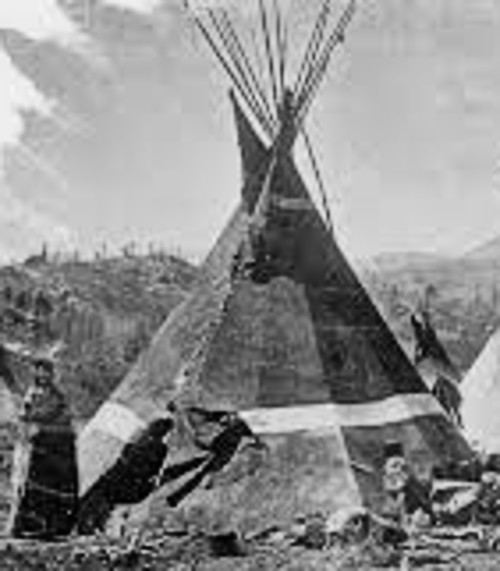
A Whashoe Tepe
Part Seven: The Washoe Man and His Tipi
Roadside stands are almost as old as the roads themselves.
The people selling from them are much older.
Growing up along Highway 50, I was used to seeing tourists pull over at little roadside shops. Near the California Agricultural Inspection Station stood a Native American stand where travelers could buy woven rugs, beadwork, baskets, and other handmade crafts. I hardly gave it a second thought. Tourists stopped there. Locals usually drove right past.
I’d seen similar roadside stands in Arizona and New Mexico, and to a little boy they all seemed like part of the scenery. I never wondered who the people were or where they went when they closed up for the day.
Then one afternoon, I found out.
I wasn’t looking for him.
I was wandering through the meadow again, somewhere between the cattle, the creek where Charlie and I fished, and the forest that hid the giant anthill. Instead of following the little stream that would soon become the Upper Truckee River, I noticed something standing in the distance.
A teepee.
Not a toy.
Not something from a television western.
A real one.
The closer I walked, the larger it became. It rose from the meadow with quiet dignity, its tall poles reaching toward the Tahoe sky.
As I approached, a man stepped through the round doorway.
“Hello,” he said with a warm smile.
“Hi,” I answered, suddenly realizing I had wandered a long way from home.
“Can I help you?” he asked. “Are you lost?”
I pointed across the meadow.
“I live over there.”
Then I confessed the real reason I’d come.
“I saw your teepee.”
He smiled.
He told me he was the man who owned the Native American roadside stand on Highway 50. Every evening, after closing his stand, he simply walked home across the meadow.
Home.
Not to a house hidden among the pines.
To the teepee standing before us.
Then he said something that changed my day.
“Would you like to see inside?”
I nodded so quickly I probably looked like a bobblehead.
Stepping through the round doorway felt like entering another world.
Inside, it was larger than I had imagined. Around the edges were wooden storage boxes holding food and supplies. In the center was a fire pit where he cooked meals and kept warm during the cold mountain nights.
Nothing seemed out of place.
Everything had a purpose.
He patiently explained how he had built it.
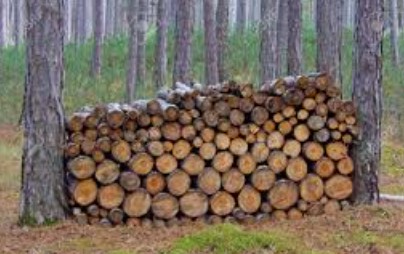
The long poles, he said, were lodgepole pines cut nearby. Every limb had been removed, and each pole carefully peeled of its bark. The tops leaned together high overhead, tied securely where they crossed, while the bottoms formed a great circle on the ground.
Instead of animal hides, he had covered it with heavy canvas because it was practical and durable.
Then he explained something that has stayed with me ever since.
The ground inside wasn’t perfectly level.
Around the inside edge he had dug a shallow drainage trench.
At first I couldn’t understand why.
Then he explained how rain and melting snow flowed.
Water entering through the opening at the top didn’t simply drip into the living space. It ran down the lodgepole poles themselves. Because each pole overlapped the next, the water naturally followed the wood all the way to the outer edge, where it dropped harmlessly into the drainage trench instead of onto the floor.
I stood there amazed.
It was simple.
Elegant.
Ingenious.
He pointed upward.
The opening at the top wasn’t a flaw.
It was the chimney.
The fire’s smoke rose naturally through the opening while the overlapping poles and canvas kept the rain outside where it belonged.
Even the round door had a purpose.
“When the snow gets deep,” he explained, “a round door can still be opened.”
Every answer seemed to reveal another question I hadn’t even thought to ask.
As a little boy, I had imagined teepees were simply tents.
Instead, I discovered they were carefully engineered homes, shaped by generations of experience living through Sierra winters that buried cabins, blocked roads, and humbled anyone who underestimated them.
When I finally thanked him and started walking back across the meadow, I wasn’t carrying anything in my hands.
But I was carrying something far more valuable.
Understanding.
Sunday nights, I’d watch Bonanza and imagine I was learning about the Old West.
But that afternoon, standing inside a teepee in the shadow of Mount Tallac, I realized the oldest lessons in Tahoe didn’t come from television.
They came from the people who had called these mountains home long before the first wagon crossed the Sierra.
It remains one of the greatest gifts a stranger has ever given me—not a souvenir from a roadside stand, but the gift of his time, his kindness, and a glimpse into a way of life that belonged to these mountains long before I did.
About Post Author