Challenge Coin of Former Sheriff Hal Barker
Cris Alarcon [Cris Price]
I was not yet ten years old when they started pulling me aside.
Not to scold me. Not to correct me. But to tell me things—quietly, deliberately—the kind of stories you don’t interrupt. The kind you carry.
Two women did this more than anyone else: Opal Sadler and Selma White Ferguson. They were not timid people. They were of a generation that did not ask permission to speak, and certainly not to live. Looking back, I understand now—they weren’t just telling stories. They were assigning responsibility.
“Someone has to remember,” Opal told me once.
So I did.
The Unlikely Membership
I didn’t meet Opal Sadler by accident. I was placed there—quietly, almost administratively—by my mother.
In the mid-1970s, Opal was serving as president of the National Federation of Business and Professional Women’s Clubs at the local level. My mother was a member. Like many civic organizations of that era, the group operated under strict charter requirements. Membership numbers mattered. Fall below the threshold, and the chapter risked losing its standing.
They were short one member.
So my mother did what practical women of that generation often did—she solved the problem directly. She added me to the roster.
I was a little boy, suddenly and improbably counted among professional women, sitting in rooms where business was discussed, decisions were made, and—more importantly for me—stories were told.
That is how I came to know Opal. 
Why They Chose Me
Looking back, I don’t think the membership technicality is what mattered to Opal. It simply opened the door.
What mattered was proximity—and perhaps something they recognized in me that I didn’t yet understand myself.
Opal was not reserved. She spoke plainly, and she spoke often. But when she told certain stories—about the lodge, about the early days of El Dorado—her tone shifted. Those weren’t for the room. Those were passed more deliberately.
The same was true of Selma White.
Twice in my childhood—both times before I was ten—older women took me aside, out of the general conversation, and told me history as if it were something fragile. Something that needed a carrier.
There was no ceremony to it. No formal instruction. Just the quiet assumption that I would remember.
And now, decades later, I understand the implicit contract:
I was never meant to keep these stories.
I was meant to repeat them.
The Lodge Above the Store
The building still stands in El Dorado—what was once called Mud Springs—its brick face carrying more history than most people realize. Above the old store sits Hiram Lodge No. 43, Free and Accepted Masons, chartered May 6, 1854.
That part is documented.
According to a historical marker dedicated in 2005 by the Native Sons of the Golden West, the lodge first met in rented spaces before completing its brick building in 1862. It burned in the devastating El Dorado fire of September 17, 1923, and was later rebuilt using the original bricks, reopening on March 26, 1925.
Those are the official facts.
But what I was told fills in the spaces between them.
A Walk Between Towns
Opal once told me a story about the lodge’s earliest days—back when El Dorado was still rough-edged and not yet settled into law.
She said that when the lodge was first organized, it needed a Master to formally open and conduct meetings. So, the Master from Placerville would walk—on foot—from Placerville to El Dorado once a week. He didn’t ride. He didn’t hurry. He walked, with his dog beside him.
He would open the lodge, stay the night, and walk home in the morning.
I’ve never found that story in any official record. But I’ve learned not to dismiss things simply because they weren’t written down.
Early El Dorado County wasn’t always recorded—it was remembered.
When the Lodge Was the Law
There was another story Opal told me—one she did not embellish, and did not soften.
She and her husband, Red, lived across the alley from the lodge. In those days, she said, there wasn’t always formal law enforcement in the way we understand it today. Decisions—serious ones—were sometimes made inside those lodge meetings.
“One time,” she said, “there was a truly bad man in town.”
She didn’t name him. She didn’t need to.
The lodge met. A decision was made.
The next morning, she told me, she stepped outside and saw the man lying dead in the alley.
She turned and called into the house:
“Red! Get that body out of here!”
The official version, she acknowledged, was that the man was found at the cemetery up the hill.
“Official,” she said, with a tone that made the word do all the work.
Fire, Survival, and Record Keepers
What is documented is how close the town came to losing everything.
The 1923 fire, which began at the California Door Company in nearby Diamond Springs, destroyed roughly 30 buildings and nearly wiped El Dorado off the map. The Masonic Temple was among those lost.
But the records—the lifeblood of any lodge—were saved.
Accounts note that a man named Jos. Windel, along with others from Placerville, rushed into the burning structure to retrieve them. Without those records, much of the lodge’s early history would have vanished entirely.
During the rebuilding, the Masons met at the I.O.O.F. Hall in Diamond Springs—free of charge, a gesture that still echoes as an example of fraternal solidarity in the county’s early years.
Selma, Zorra, and the Land That Split
If Opal gave me the stories of the lodge, Selma White gave me something else entirely—land, lineage, and the complicated arrangements people don’t put in newspapers.
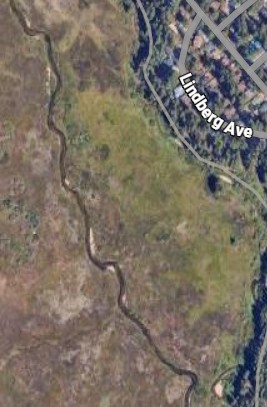
She told me about John White, a landowner tied to early Highway 50 commerce, when the route followed much of what we now call Mother Lode Drive. He operated a service garage for trucks—small by today’s standards—on property that still exists near the corner of 6556 Mother Lode Drive and Lindbergh.
She showed me something I’ve never forgotten: what she claimed was an “open” marriage license between John and his earlier wife, Zorra—a woman Selma described as a 1920s flapper who came west before settling in Placerville.
Selma said Zorra had freedom—unusual for the time—and that pieces of land were given away to lovers. She pointed out neighboring parcels as proof, naming families and properties as if tracing a map only she could fully see.
Whether every detail holds under modern scrutiny is a question for historians and records offices. But the land itself—the parcels, the structures, the layout—still reflects a past shaped by personalities as much as by paperwork.
The Women Who Carried It
What ties all of this together, for me, isn’t just the lodge or the fire or even the stories themselves.
It’s the women.
Opal. Selma. My mother. My grandmother.
They moved across states, across circumstances—St. Louis to Chicago, Chicago to South Lake Tahoe—making decisions that reshaped their lives and, quietly, the lives around them.
They were not passive figures in history. They were authors of it.
And they chose, for reasons I’m still working out, to pass pieces of that history to a kid who hadn’t yet learned how to question it properly.
Memory vs. Record
There’s a line I’ve come to respect over the years:
“History is what is written. Memory is what is carried.”
El Dorado County has both.
The charter date of Hiram Lodge No. 43—May 6, 1854—is a matter of record. The fire of 1923 is documented. The rebuilding in 1925 is confirmed.
But the man in the alley, the walk from Placerville, the quiet decisions behind closed doors—those belong to memory.
And memory, fragile as it is, doesn’t survive unless someone repeats it.
Why I’m Writing This Now
I was told to pass it on.
That was the assignment.
Not to prove it. Not to polish it. Just to make sure it didn’t disappear when the people who carried it were gone.
So this is me, doing exactly that.
If your family has ties to these names—Sadler, White, Windel, or the early Masons of El Dorado—you may hold pieces that confirm, correct, or deepen what I’ve shared here.
Because in a place like this, history isn’t finished.
It’s still being remembered.
About Post Author